How to become a Midwife without a Nursing degree?
Evidence-based practice and focusing on the individual woman are at the heart of midwifery. Midwives are medical professionals who assist during pregnancy, labor, delivery, and the immediate postpartum period.
Midwives are very important because their care has been shown to reduce the likelihood that a woman may require a cesarean section, as the American College of Nurse-Midwives reported.
Sounds like a fulfilling job? So how can you become a midwife without a nursing degree?
This article will cover everything you need to know. We will look into the education requirements to become a midwife, followed by alternative paths you can take if you do not have a nursing degree. We will even explore the steps that can be taken to pursue a career as a midwife regardless of a nursing degree. We’ll end with some insightful resources to aid you in your journey toward becoming a midwife.
Let’s get straight into it!
Overview of Midwifery Education Requirements
Earning a Master of Science in Midwifery (MSN) degree can be accomplished in a number of methods. Beginning with an undergraduate degree in nursing, either a two-year Associate Degree in Nursing (ADN) or a four-year Bachelor of Science in Nursing (BSN), is the standard first step toward becoming a registered nurse (RN) (BSN).
To become a registered nurse, an associate degree in nursing might be the most efficient route. However, many people who want to work as nurses opt for the BSN route because it leads directly into graduate school. An additional two years of undergraduate study beyond an ADN are required to acquire a BSN or to enter an ADN-to-MSN bridge program.
If you are not ready to commit so much time, there are alternative ways in which you can become a midwife even if you do not have a nursing degree:
Apprenticeship
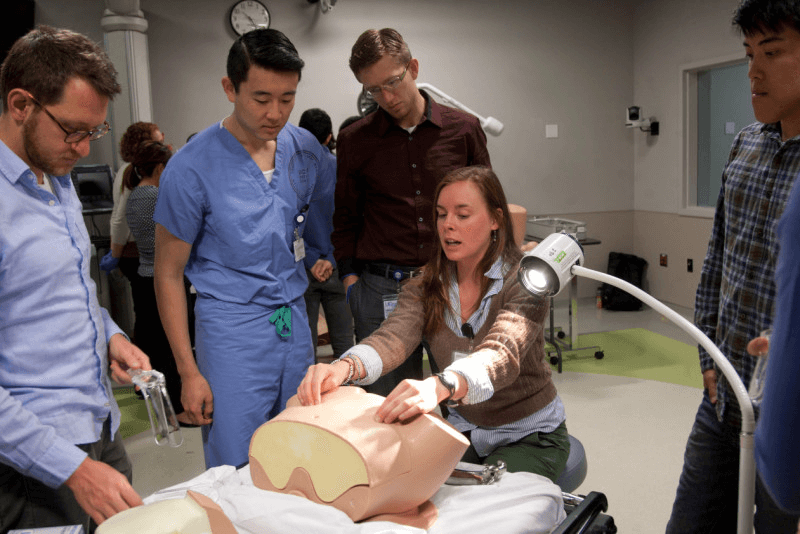
Training at one’s place of employment is known as an apprenticeship. It’s a hybrid program that blends on-the-job instruction with formal education. Apprentices work for pay while the company pays for their training.
This is an alternative to going to college for four years to get a degree, but you will still be expected to do well academically at a degree level. It is possible to gain the necessary experience and credentials through an apprenticeship in health care/care offered by several healthcare organizations and then apply for a pre-registration degree in midwifery or continue on to the midwifery degree apprenticeship.
Certification Programs
To become a midwife, you can take classes online instead of attending nursing school. Most states recognize the American College of Nurse-Midwives (ACNM) as an approved provider of continuing education for nurse midwives. Consider credentials from a variety of relevant professional bodies like the American Academy of Nurse Practitioners Certification Board (AANPCB), the American Association of Critical Care Nurses (AACN)
Direct-entry Programs
In states that do not require midwives to have a nursing license, direct (non-nursing) training programs equip students to assist pregnant women before, during, and immediately after giving birth. It includes training in prenatal counseling and risk assessment, labor support, natural childbirth, postpartum care, obstetric emergency management, patient referral, relevant regulations, and professional standards and ethics.
Now that we know some routes you can take when trying to become a midwife without a nursing degree, let’s dive into the steps of becoming one:
5 Steps to Become a Midwife without a Nursing Degree
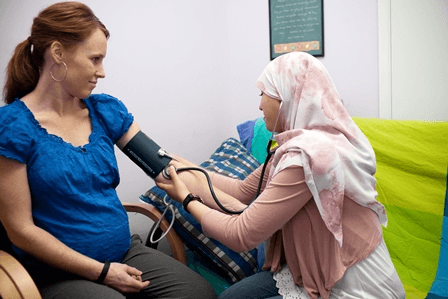
Are you wondering, “can you be a midwife without being a nurse”
The answer is yes. Here is the step-by-step way of becoming a midwife without a nursing degree:
- Research midwifery schools and programs
- Determine state regulations for midwifery practice
- Meet any additional requirements
- Complete a midwifery education program
- Obtain licensure or certification as a midwife
Let’s look at each of these in greater detail:
1. Research midwifery schools and programs
There are several midwife programs for non-nurses available, but how do you choose which one is the best?
The simple answer is research!
The first step is to verify the program’s legitimacy. Ensure the American College of Midwives or the American Midwifery Certification Board has granted the program accreditation. Do some research to find out if the program offers any helpful classes for midwifery work. Finally, it’s crucial to look at the program’s faculty to ensure they have relevant professional expertise in midwifery.
2. Determine state regulations for midwifery practice
Determining state regulations is an important part of becoming a midwife for non-nurses. This is because there are variations in state laws, and some midwives may not be qualified to work in a specific state without a bachelor’s degree. However, some research will easily fix this issue.
Over time, the standards and requirements for certified nurse-midwives (CNMs) have become more or less the same across the country. While some states have made it illegal for any midwife who is not a CNM to practice, other states have created stringent rules and procedures for DEM licensure.
3. Meet any additional requirements
Some of the additional requirements for becoming a midwife without a nursing degree are to complete clinical hours. The theoretical frameworks you’ve learned about can be used in a practical setting, and you get to gain useful experience in the process. Students’ ability to apply what they’ve learned in the classroom and lab to real-world scenarios is greatly enhanced by clinical experience.
Typically, you must complete 600 to 1,200 clinical hours, depending on the curriculum.
4. Complete a midwifery education program
Submit an application to the midwifery program that most closely aligns with your previous academic experience and training among the several available in the United States. Public health is a popular choice for prospective midwives. It is possible to earn this degree either at a typical campus-based institution or online. In order to practice as a midwife, some individuals opt to earn a degree in biology or a closely related discipline.
Participate in actual births as a student and learn from the perspective of a professional midwife.
All states require prospective midwives to complete a midwifery education program and a bachelor’s degree. Depending on the length and focus of the program, students might expect to learn about anatomy and physiology, obstetrics, neonatal care, and other relevant subjects.
5. Obtain licensure or certification as a midwife
Once you’ve finished your education, you can apply for a license in your state by passing the relevant exams. Midwifery licensing requirements differ from one jurisdiction (country, province, or state) to the next. Each US state has its own requirements for midwifery licensure. Licenses for nurse-midwives can be obtained in all 50 states.
After finishing their education and clinical rotations, aspiring midwives must take and pass a certification exam from the American Midwifery Certification Board (AMCB) to practice legally.
Advantages and Challenges of Becoming a Midwife without a Nursing Degree
There are a few good reasons to become a midwife without first getting a degree in nursing. One benefit is that would-be midwives don’t have to invest the time and money required to get a nursing degree to follow their passion. Also, many programs that teach people how to be midwives offer online and evening classes to help students with busy lives. In conclusion, midwives who do not have a nursing degree sometimes have more options for where they can work, including in private practice, hospitals, and birthing centers.
There are many good things about becoming a midwife without a nursing degree, but those who are interested should also be aware of the possible bad things. The potential failure to earn national certification is a major threat. In the United States, people who want to be midwives will be unable to work as midwives until they pass this test. The job market is somewhat saturated, so finding the perfect job for you might be difficult. Moreover, different states have different laws, which could pose a threat.
But don’t worry; with the right planning and preparation, you can find out what the state requires and what jobs are available for you.
Recommended Resources for Further Information
The American College of Midwives could be very helpful to people who want to become midwives because it has a lot of information for people who want to work in the field. The American Midwifery Certification Board also has a complete list of all the accredited midwifery programs in the United States. When researching the midwifery licensure requirements in your state, the National Council of State Boards of Nursing is a great resource.
Here are some additional resources you can look into:
- University of California Berkeley
- Global Health eLearning Center
- University of Virginia School of Medicine
- World Health Organization
- University Of Nottingham
- MedEd PPD
- American College Of Nurse-Midwives
These resources are a great way to inform yourself and bring you closer to making the right decisions. Check these out!
Conclusion
It is possible to become a midwife without a nursing degree, and this choice may be great for you.
This article was written to help people who do not have a nursing degree figure out how to become a midwife. The steps have been listed in their simplest form, so you can dive in. Just remember that research is your best friend when it comes to planning and working toward your goals.
Midwifery can be a demanding field, but the best part is that it is fulfilling. If you want to play a role in helping others and providing ease, this field might be the perfect one for you. So get started now by using the many resources at your disposal.
If you want to become a midwife but don’t have a nursing degree, don’t let that stop you from having a fulfilling career!
Are you an enrollment marketer?
Think Orion helps higher education institutions and colleges increase enrollment through proven digital marketing strategies.
Grow Your Enrollment →Related Articles You Might Like
Explore More from the Think Orion Education Network
- Best Coding Bootcamps (Faster Than a Degree) — Know It Get It
- Best Coding Courses to Switch Careers — Know It Get It
- Best Math Courses to Prep for Any Exam — Internet of Learning


Leave a Reply